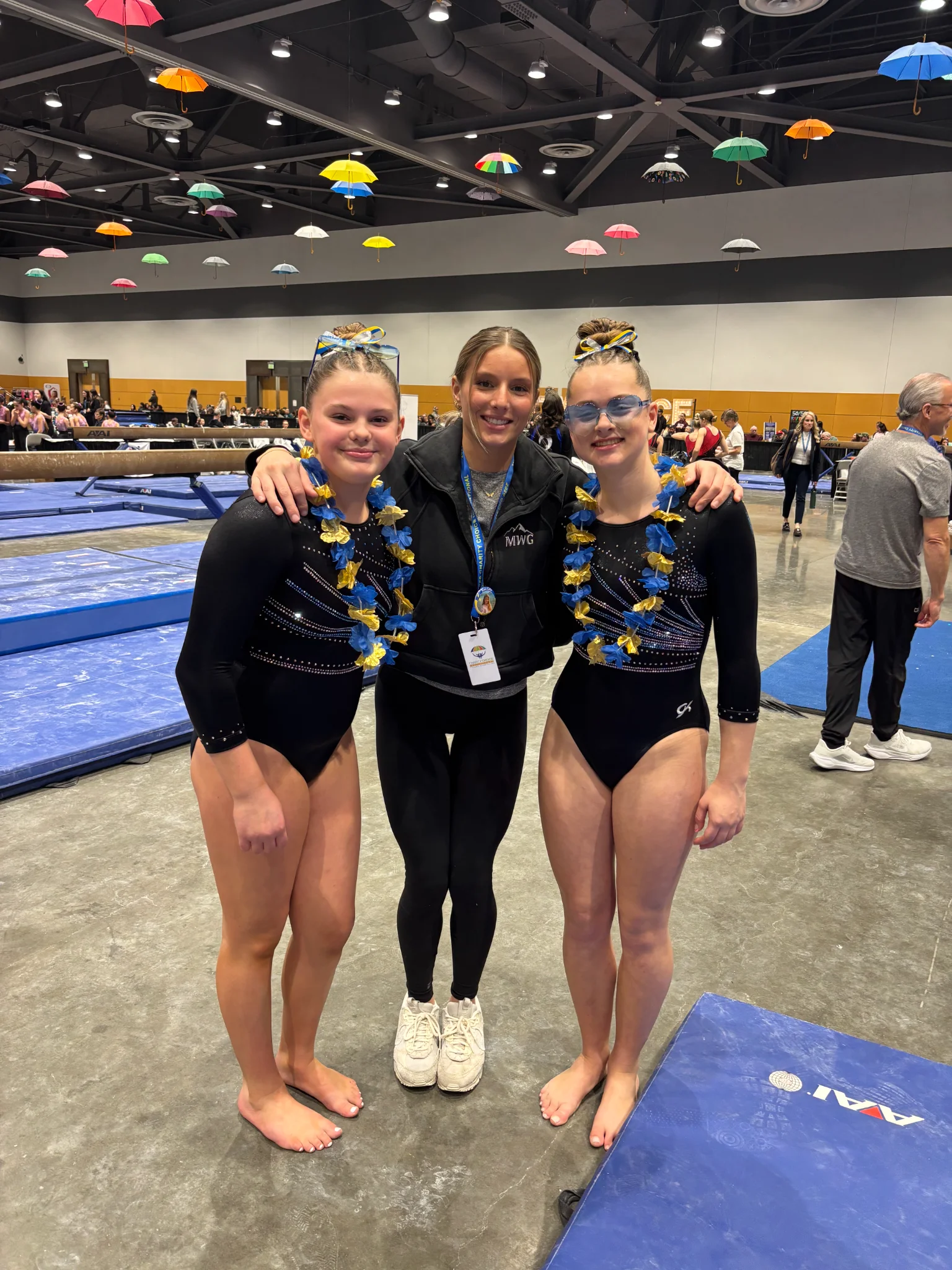
About me
Hi! I’m Summer Arvanetes, and I am currently working toward my Bachelor of Science in Kinesiology with an emphasis in Rehabilitation Science at Boise State University.
My goal is to continue my education and become a physical therapist, ideally working with athletes. Growing up as a competitive gymnast and now working as a gymnastics coach has given me a strong understanding of injuries, recovery, leadership, and the importance of supporting athletes both physically and mentally.
I am hardworking, creative, dedicated, and naturally take on leadership roles. I want to use my experiences and education to help athletes feel supported, confident, and capable throughout the recovery process.
Personal Statement
Growing up in gymnastics, pain was almost normal. If something hurt, you taped it, iced it, and kept going. For a long time, I thought that was just what being an athlete meant. I thought pushing through pain proved that I was strong, dedicated, and serious about my sport. Now, at 21 years old, I am still dealing with injuries that were not handled the way they probably should have been when I was younger.
I started gymnastics when I was four years old, and it quickly became the center of my life. I spent years training long hours, being homeschooled around practice, competing at a high level, and building almost my entire identity around the sport. I learned discipline, toughness, and how to keep going even when I was tired, scared, or in pain. But I also learned how easy it is for young athletes to believe that their sport matters more than their health.
That is a huge reason why I want to become a physical therapist.
As I got older, the injuries started adding up. I dealt with pulled muscles, chronic pain, broken bones, back problems, and serious ankle injuries. At one point, I continued training on an ankle injury for months because stopping did not feel like an option. I had goals, I wanted a college opportunity, and I truly believed that if I took time off, everything I had worked for would disappear.
The effects of those injuries did not end when I stopped competing. I still deal with pain and problems from gymnastics now. I have had to go through another ankle surgery, and both of my ankles have been affected by years of training and impact from the sport. Even if I had never continued gymnastics after certain injuries, some of the damage was already there and I still would have needed treatment and surgery. That is something I think about a lot now because the consequences of an injury can last far beyond the season or even beyond the sport itself.
Looking back now, I see that mindset completely differently.
A sport can be a huge part of who you are, but it is not your entire identity. Your health has to matter more than a practice, a meet, or a season. I wish I understood that when I was younger, and I want to help other athletes understand it before they are dealing with the same problems years later.
That does not mean I want to tell athletes to give up or stop pushing themselves. I actually want the opposite. I want to help them keep doing what they love in a way that is safe, realistic, and healthy. I understand the mindset of an athlete who is scared to miss practice or feels like one injury is going to ruin everything. I have been that person. I think that experience gives me empathy that I can carry into physical therapy.
My interest in the body has also grown a lot through school. Exercise Physiology has become one of the classes I am the most interested in because I genuinely like learning how the body responds to exercise. A lot of the time after class, I will look something up on my own because I want to understand more than what I need to know for an exam.
Through Exercise Physiology labs, I have gotten hands on experience with things like cardiovascular responses, oxygen consumption, muscular fatigue, anaerobic power, and exercise testing. I have also completed Biology and Chemistry labs and a hands on taping class. Those classes have made me more comfortable in settings where I am actually applying what I am learning instead of only reading about it.
Nutrition has also been something I have been interested in for a long time. Growing up, I learned early that the way I fueled my body could completely change how I felt in practice. I remember being able to tell the difference between practices where I had eaten well and practices where I had not. That made me curious about recovery, energy, performance, and how different parts of health all connect.
Coaching gymnastics has also changed the way I think about helping athletes. I have learned that every athlete is different. Some athletes need confidence. Some need structure. Some need someone to explain something five different ways before it finally clicks. Some just need someone to listen to them.
That has taught me that being good at helping people is not just about knowing information. It is also about communication, patience, trust, and understanding the person in front of you.
I naturally tend to take on leadership roles, both in coaching and in school projects. I like being organized, getting things started, and making sure everyone understands what needs to happen. At the same time, I have learned that being a leader does not mean being the loudest person in the room. It means knowing when to push someone, when to listen, and when to adjust your approach.
That is one of the reasons physical therapy feels like such a good fit for me. I know it is not just about working with athletes. Physical therapists work with all kinds of people, injuries, abilities, and goals. I understand that the job involves evaluating movement, creating treatment plans, tracking progress, educating patients, communicating with other healthcare professionals, and constantly adjusting based on how someone responds.
Sports are what originally pulled me toward physical therapy, but learning more about the profession has made me interested in the bigger picture. I like the idea of helping someone move better, feel stronger, trust their body again, and get back to living their life.
I also think my experience as both an athlete and a coach gives me a perspective I can bring into this field. I know what it feels like to be the athlete who is frustrated, scared, tired, and convinced that missing one day will ruin everything. I also know what it feels like to be the coach trying to help someone through those emotions.
At 21 years old, I am still learning how to take life day by day. In a weird way, I think that is a lot like physical therapy. Recovery does not happen all at once. You take it one day, one exercise, one setback, and one improvement at a time.
Things may never go back to exactly how they were before, but that does not mean you cannot heal. You learn how to adapt, grow, and move forward.
My experiences with gymnastics, injuries, coaching, school, and learning about the human body are what led me here. I cannot change how some of my injuries were handled when I was younger, but I can use those experiences to become the kind of healthcare professional I wish I had.
I want to be someone who helps athletes and patients feel like they are more than their injury, more than their sport, and more than one difficult moment. I want them to feel supported while they heal, challenged when they need it, and confident that getting better is possible.